

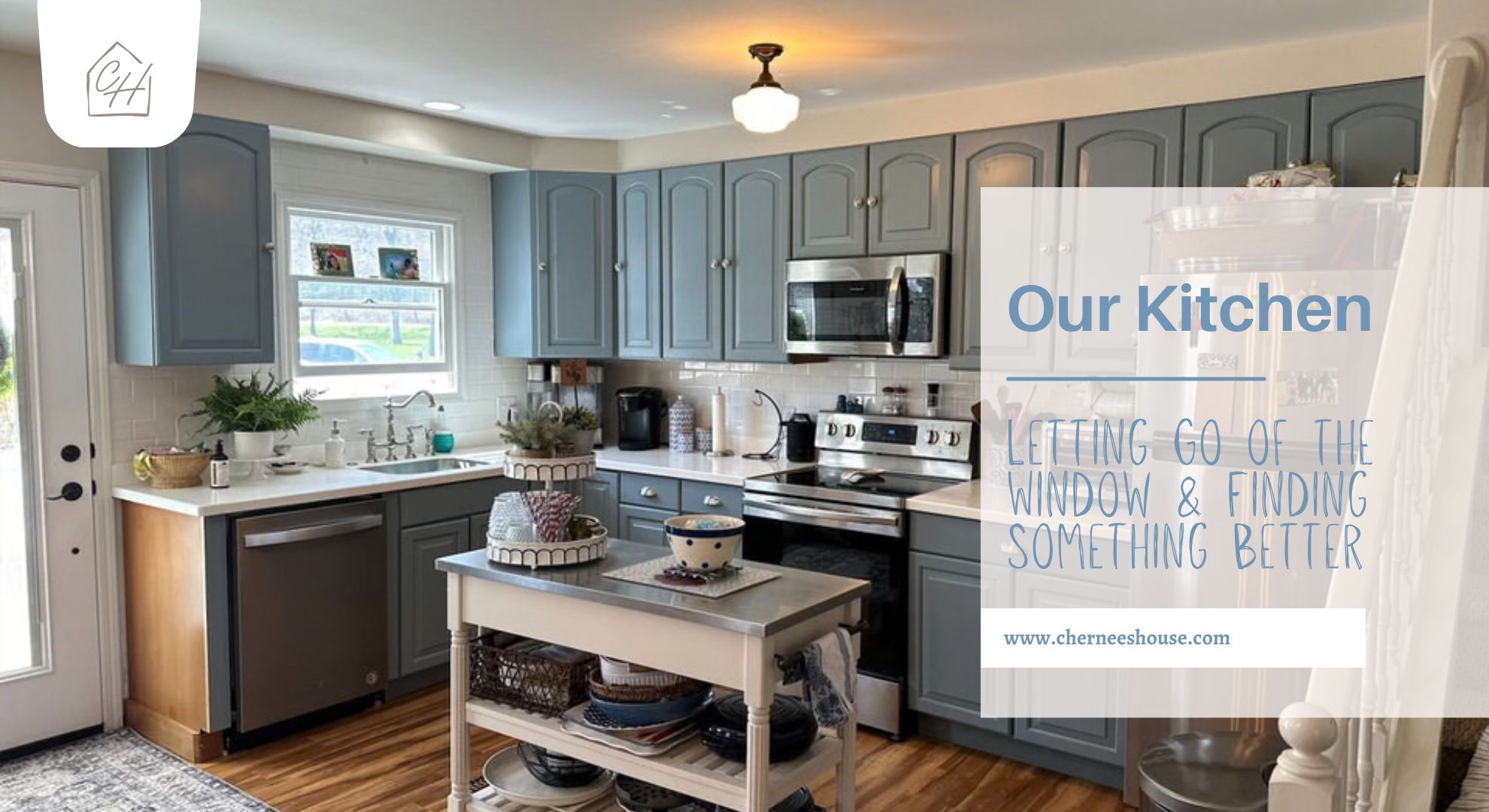
Our Kitchen: Letting Go of the Window and Finding Something Better
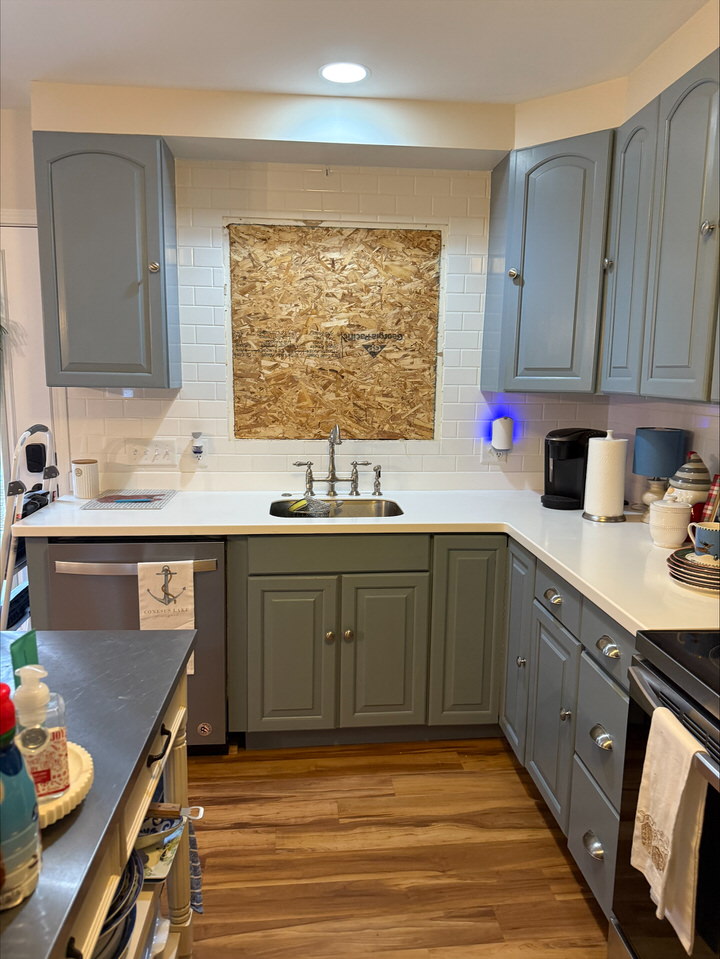
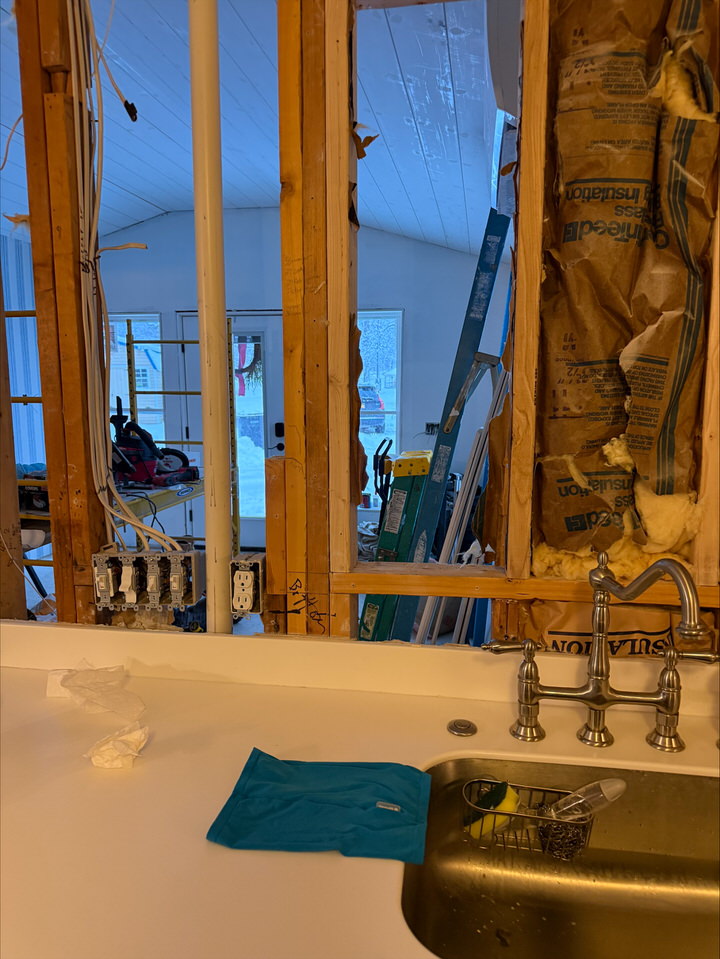
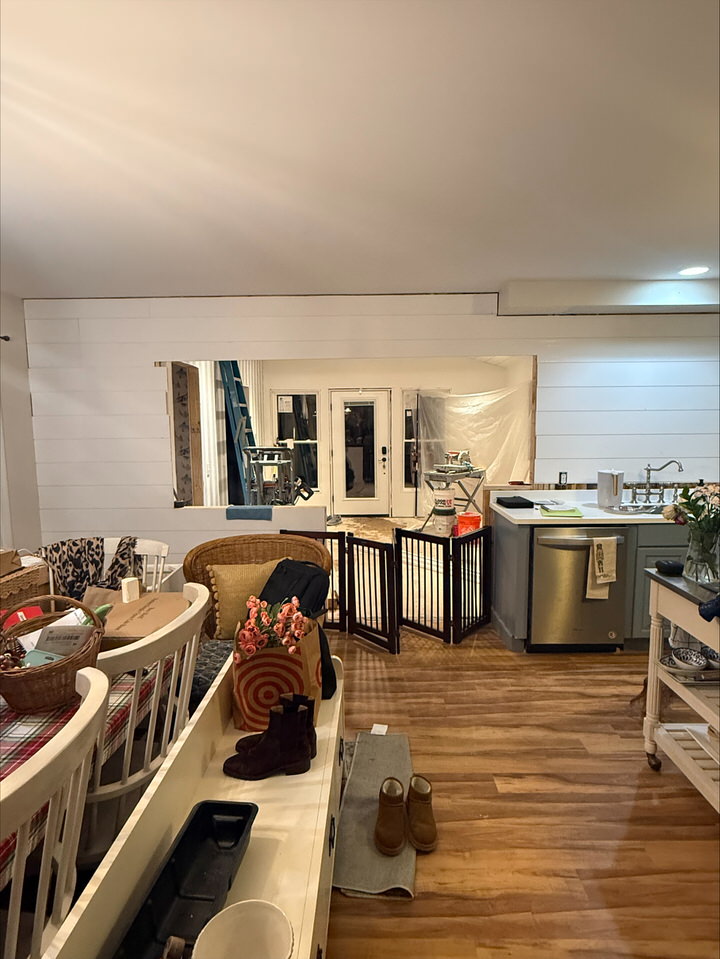
When we began planning the addition to our home, the kitchen wasn’t originally the focus of the project. For the most part, the layout stayed the same. We didn’t replace the appliances, and we didn’t completely gut the space. What we did change, however, was how the kitchen functioned—how it flowed into the new addition and how it supported the way our family actually lives in the home.
But there was one change that ended up feeling much bigger than I ever expected. The window above the sink.
The Window That Framed the View
One of the things I loved most about our kitchen was the window over the sink. Our home backs up to a park, and I can’t even count the number of times I stood there washing dishes or prepping dinner while looking out at the trees. It brought beautiful natural light into the space and made everyday kitchen tasks feel a little more peaceful.
When we started designing the addition, we really hoped we could keep that window. It had always been one of those simple features that quietly made the room feel special.
But once the foundation for the addition went in, reality started to set in. If we kept the window where it was, the view would no longer be the park—it would be a wall. Even more importantly, keeping the window would limit the amount of usable square footage we could gain in the addition. If we wanted the storage and the extra space our family truly needed, the window had to go.
I won’t pretend that was an easy decision. In fact, it was probably the hardest part of the renovation for me. I underestimated how much that single architectural feature shaped the feeling of the kitchen until the moment it disappeared.
When the Window Was Gone
Once the window was removed, the corner of the kitchen felt noticeably different. The room instantly felt darker, and for a moment it almost felt like we had made the wrong decision. It’s incredible how much impact one element can have on a space.
But renovation—and really, design in general—is often about trade-offs. If we were gaining the space we needed in the addition, then the kitchen needed to evolve as well. Instead of trying to recreate what we had before, I started asking a different question: what could this wall become instead?
That shift in perspective ended up opening the door to a much better solution.
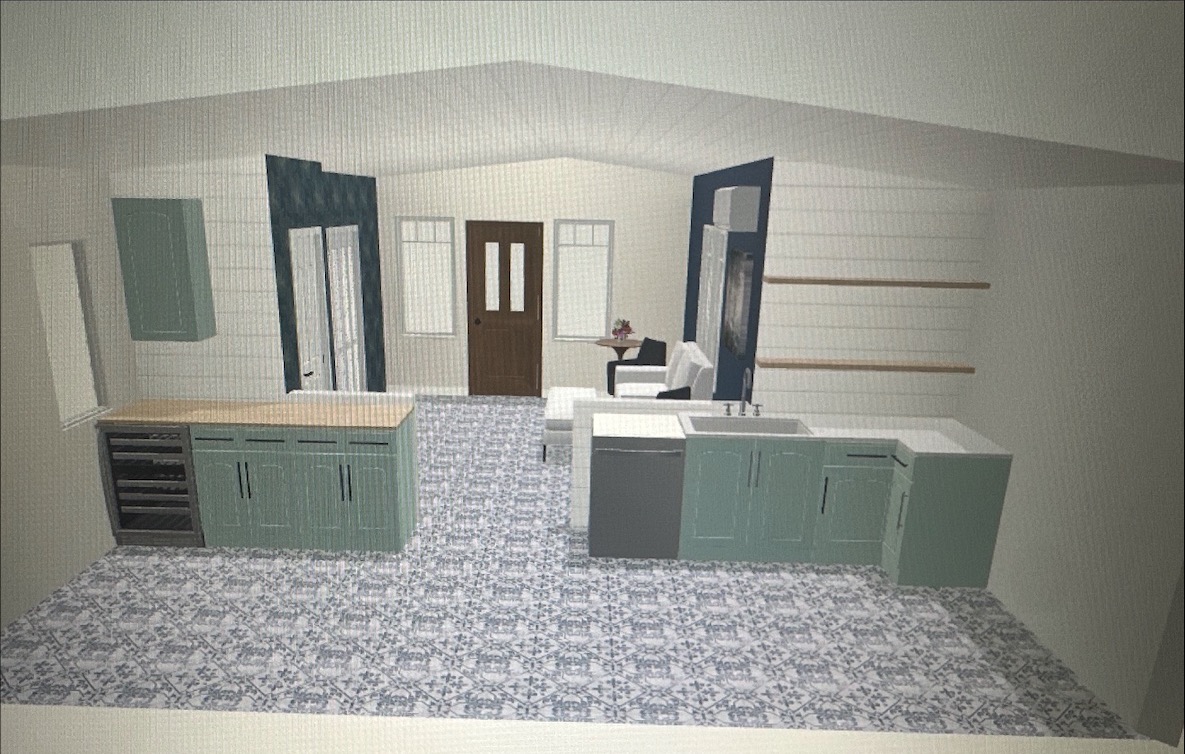
Rethinking the Wall Above the Sink
Originally, we considered reinstalling the subway tile that had been there before. However, our contractor warned that matching the grout perfectly would likely be impossible, which meant the repair could end up looking patched together rather than intentional.
Sometimes those kinds of limitations actually lead to better design decisions.
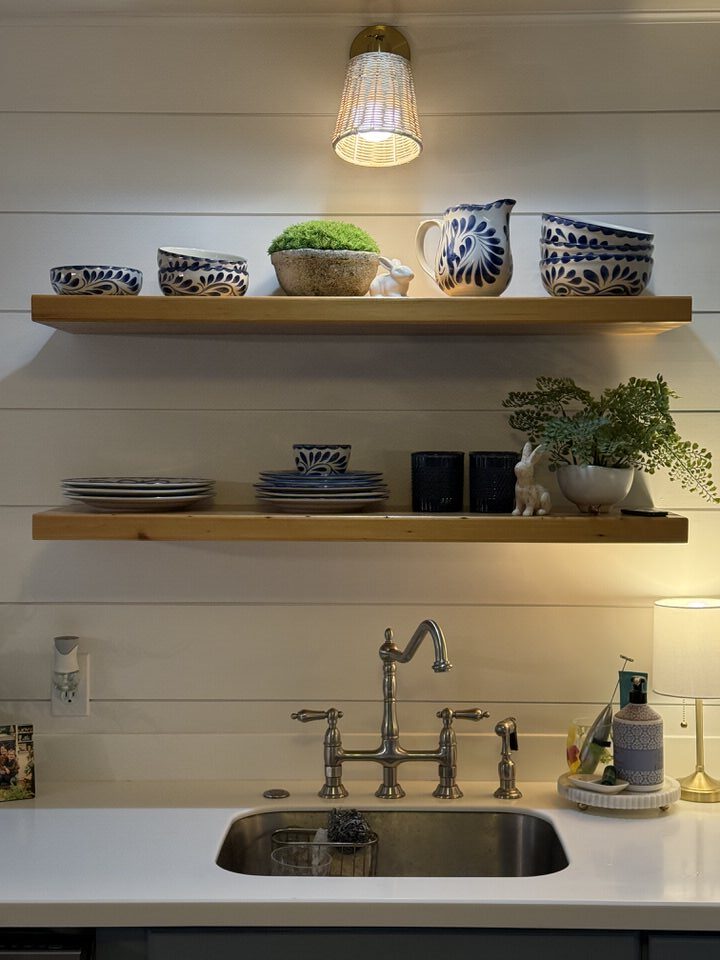
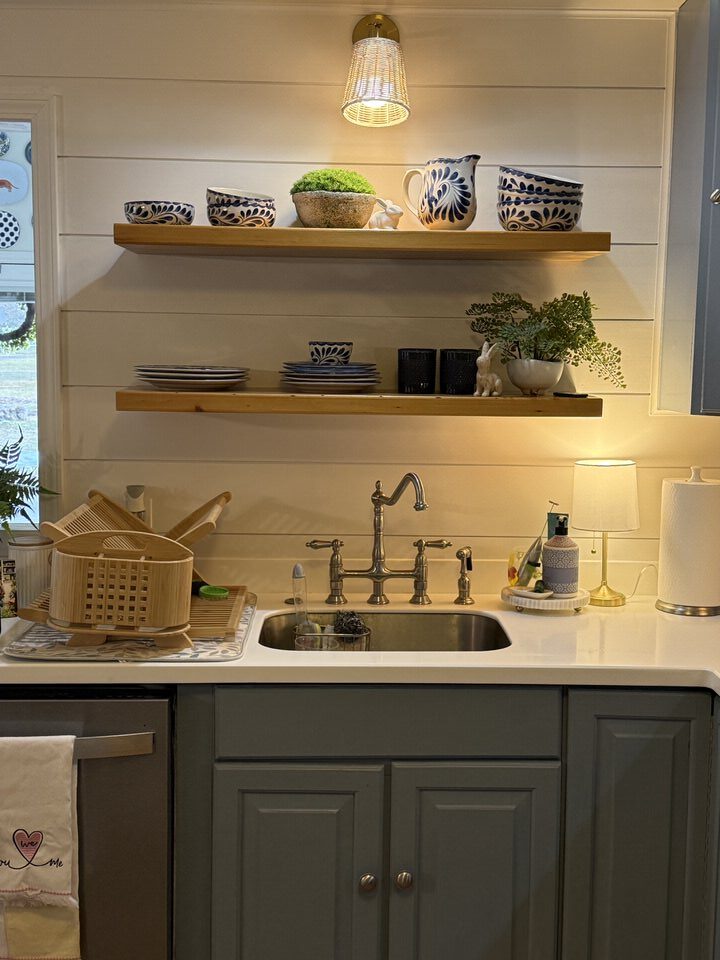
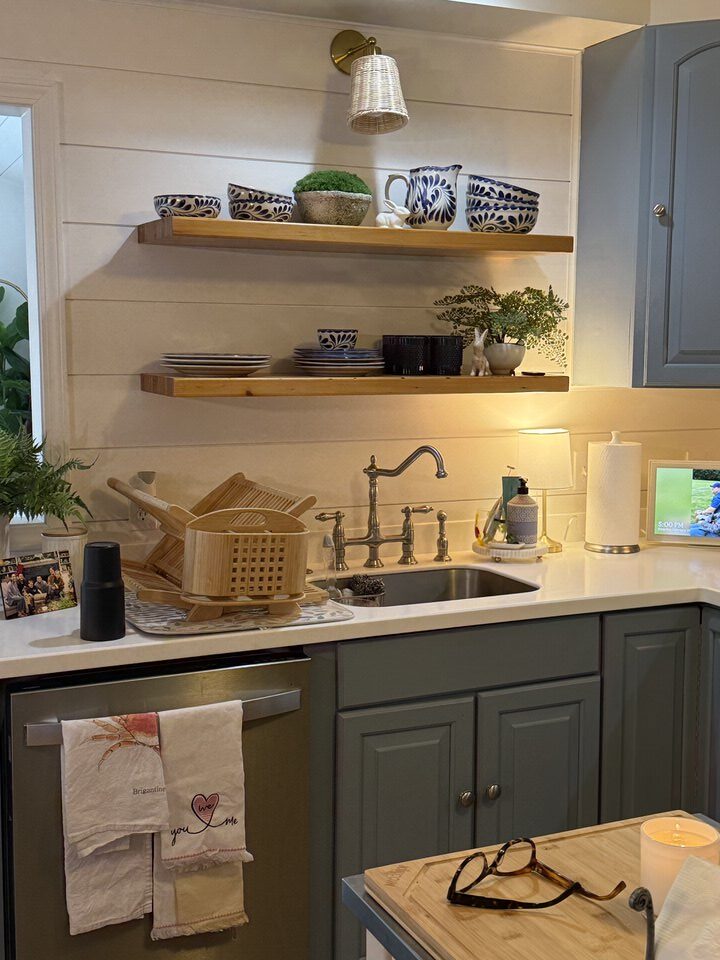
I’ve always loved open shelving in kitchens, and this seemed like the perfect opportunity to incorporate it. Instead of replacing the tile, we carried the shiplap from the new addition into the kitchen and dining area. This allowed the spaces to feel visually connected and created a more cohesive transition between the original house and the new construction.
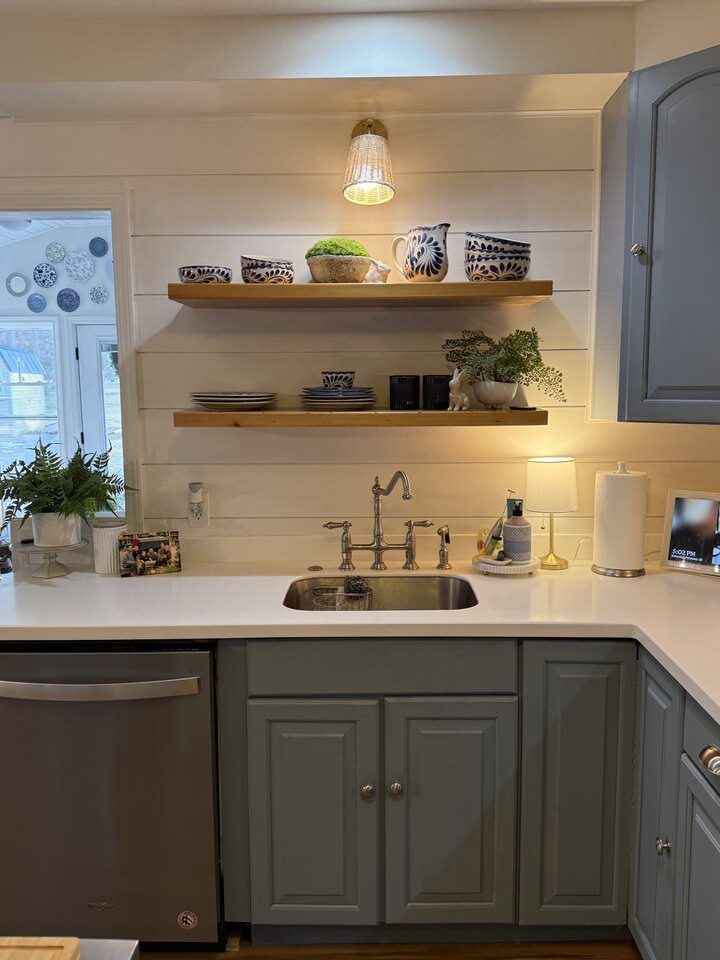
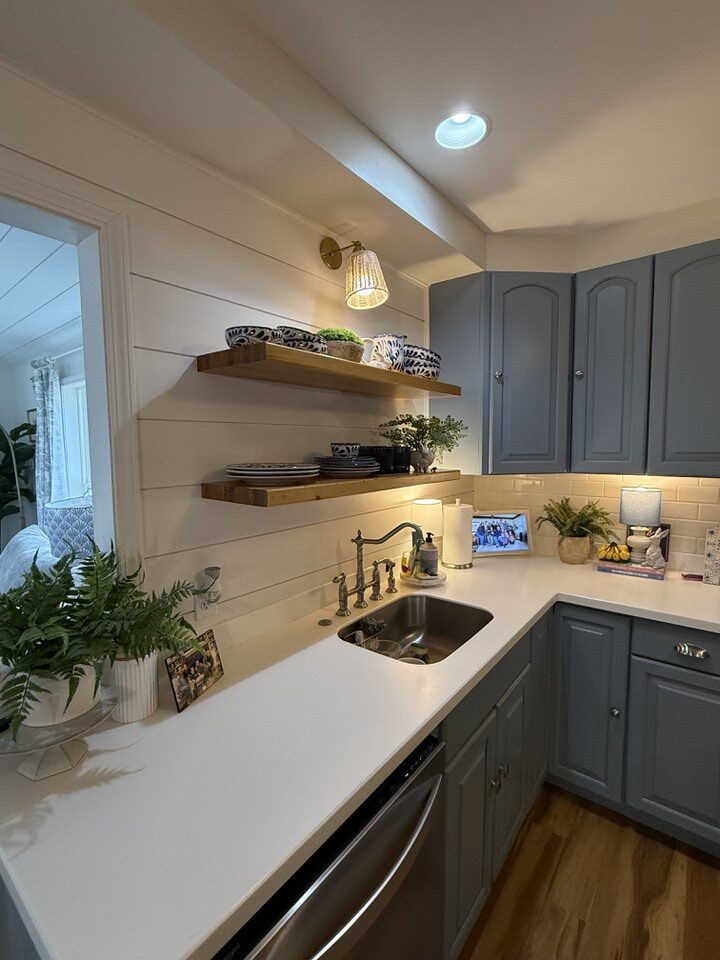
Above the sink, we installed floating wood shelves. Not only did this provide a beautiful styling opportunity, but it also allowed us to widen the opening between the kitchen and the addition even more. That single change helped the entire space feel more open and connected.

Solving the Lighting Puzzle
Lighting was another unexpected challenge in this part of the kitchen. We had originally planned to hardwire additional lighting above the sink, but once the electrical work began, it quickly became clear that doing so would be more complicated—and more expensive—than we anticipated.
Instead of forcing the issue, I decided to improvise.
I installed a wireless sconce with a wicker shade above the sink and added small lamps along the countertops to brighten the space. I’ve always believed strongly in layered lighting, especially in kitchens. Relying solely on overhead lights rarely creates warmth, but combining different light sources can make a space feel much more inviting.
In the end, the layered lighting actually gave the kitchen more character than the original plan would have.
The Part I Love Most: Styling
Once the shelves were installed, the fun part began—styling them.
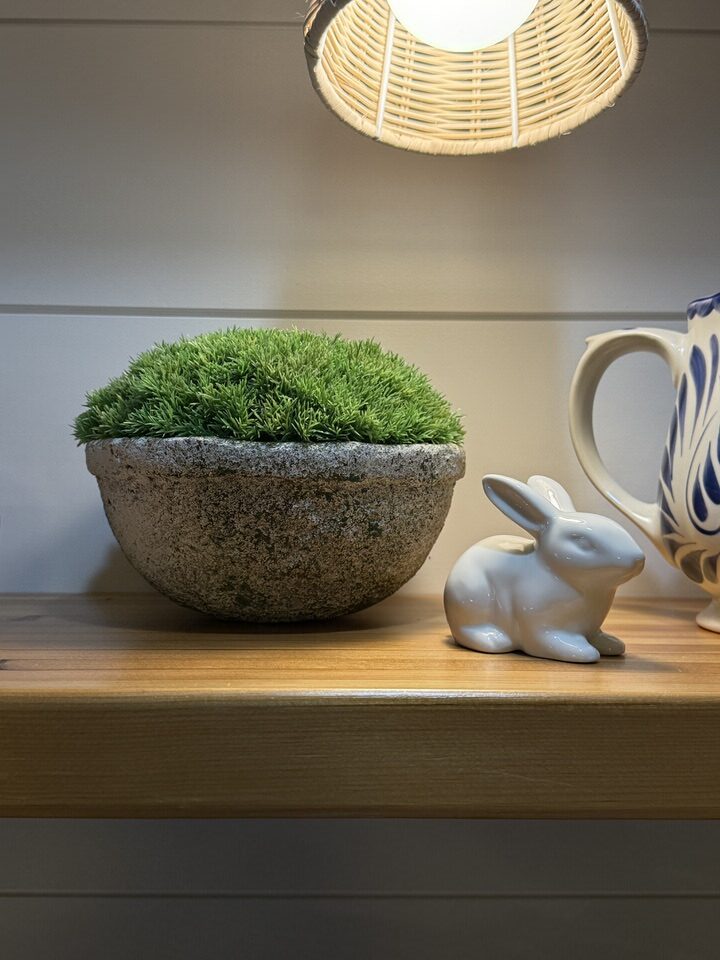
I brought out a set of blue and white dishes from Pottery Barn that I’ve always loved and placed them on the shelves so they could be both decorative and functional. We use them daily, which makes the shelves feel practical rather than purely decorative. I also added greenery for softness and a bit of life.
Slowly, the wall that once held a window transformed into a layered focal point in the kitchen.
Living with the shelves for the past month has confirmed that the decision was the right one. The shiplap fits the style of our home beautifully and adds just the right touch of southern coastal charm. It brings texture and depth to the room in a way that plain drywall never could.
Creating a Cohesive Connection to the Addition
One of the things I talk about often when designing a space is layering. Whether it’s paint, wallpaper, molding, or shiplap, wall treatments add dimension that flat drywall simply cannot provide. They make a home feel curated rather than simply constructed.
By extending the shiplap from the addition into the kitchen and dining area, the spaces now feel connected. Instead of the addition feeling like something that was simply attached to the house, it now feels like it has always belonged there.
That sense of continuity is one of my favorite parts of the entire renovation.
Sometimes Letting Go Makes Room for Something Better
Do I still miss that window sometimes? Of course. There are moments when I think about the view of the park and the natural light that used to fill that corner of the room.
But what we gained in return—more space, better storage, and a stronger connection between the kitchen and the addition—has ultimately made the home function better for our family.
And that’s what good design is really about. It’s not about holding too tightly to one beautiful element. It’s about allowing a space to evolve into what it needs to become.
So far, we’re truly enjoying this new chapter of our kitchen. And if I’m being honest, I have a feeling shiplap might just find its way into a few more places around the house.
Because sometimes letting go of one beautiful feature makes room for something even better.
coastal farmhouse kitchen, coastal kitchen design, floating kitchen shelves, home addition renovation, kitchen design inspiration, kitchen open shelving, kitchen remodel, kitchen remodel ideas, kitchen renovation, kitchen styling ideas, kitchen wall design, open shelving kitchen ideas, removing kitchen window, shiplap kitchen wall, window over sink removal