
Not everyone needs full-service interior design.
Sometimes what you really need isn’t someone to manage contractors or oversee installation — it’s clarity. A clear plan. A cohesive vision. A roadmap that helps you move forward without second-guessing every decision.
If you’re someone who enjoys being hands-on, loves the process of bringing a room together, and simply wants professional direction before you start spending money, you’re not alone. Many homeowners fall into this in-between space — not fully DIY, but not looking for full-service either.
Let’s talk about what actually makes a design plan successful when you’re implementing it yourself.
Why Most DIY Design Projects Go Off Track
The biggest challenge isn’t lack of taste.
It’s lack of sequence and cohesion.
Most people start with one piece they love — a sofa, a light fixture, a paint color — and then build outward from there. But without a full-room vision, it’s easy to end up with:
- Pieces that don’t quite relate to one another
- Scale issues (too big, too small, too heavy, too light)
- Multiple competing styles
- A color palette that slowly drifts
- Budget overspending from impulse purchases
A well-designed room doesn’t happen by accident. It works because every decision was made within a clear framework.
What a Professional Design Plan Actually Does
A professional design plan doesn’t just “pick pretty things.” It answers questions before they become expensive mistakes.
It clarifies:
- How the space should function for your lifestyle
- The mood and feeling you want the room to evoke
- A cohesive color palette
- Proper scale and layout
- Which items are foundational investments vs. accent pieces
Think of it as building the blueprint before you start ordering materials.
When the plan is clear, implementation becomes simple. You’re no longer wondering if something will work — you know it will.
The Elements That Make a Self-Implemented Plan Successful
If you’re implementing on your own, your design plan should include:
A Clear Vision
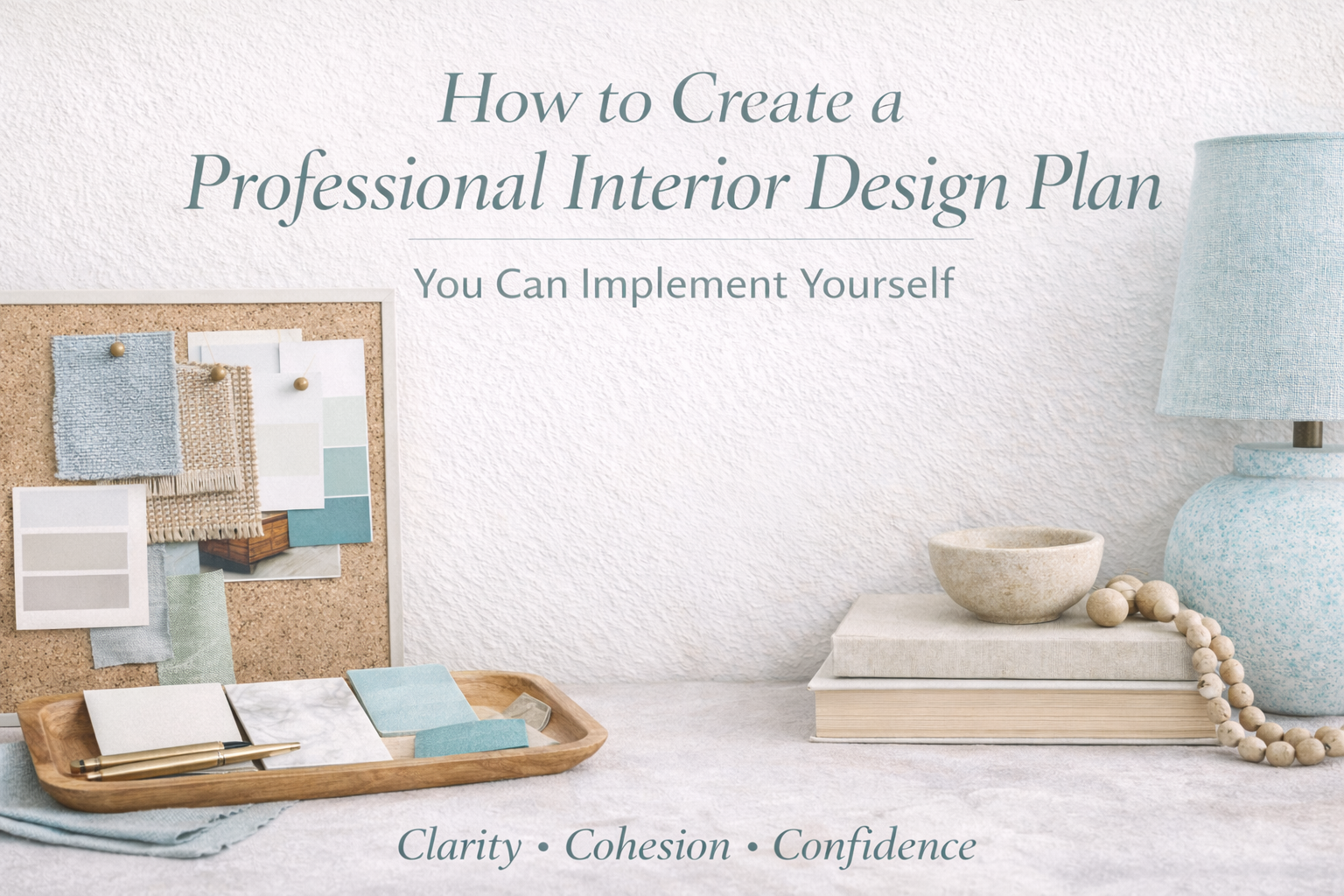
A mood board or visual guide that defines style, texture, and tone. This becomes your anchor for every decision moving forward.
Thoughtful Selections
Furniture and décor that work together in scale, proportion, and finish — not just individually, but collectively.
Purchase Direction
Knowing exactly what to buy (and where to buy it) removes decision fatigue and prevents hours of searching.
Refinement
Good design evolves slightly before it’s finalized. Revisions ensure the plan feels aligned before money is spent.
When these elements are in place, you can execute at your own pace without losing cohesion.
Who This Approach Works Best For
This type of design support works beautifully for:
- Homeowners who enjoy sourcing and styling themselves
- Busy families who need direction but want timeline flexibility
- Renters who want a cohesive look without full-service investment
- Anyone who wants to avoid costly design missteps
It’s structured guidance — without surrendering control.
A Thoughtful Middle Ground
There’s a common misconception that you either have to go fully DIY or hire full-service interior design.
In reality, there’s a middle ground.
At Chernee’s House, that’s where the Inspiration Interior Design Package lives. It provides the curated roadmap — consultation, mood board, finalized selections, purchase links, and refinement — while allowing you to implement everything on your own timeline.
It’s not about pressure or ongoing oversight.
It’s about clarity, cohesion, and confidence before you begin.
And sometimes, that’s exactly what makes a room come together beautifully.