

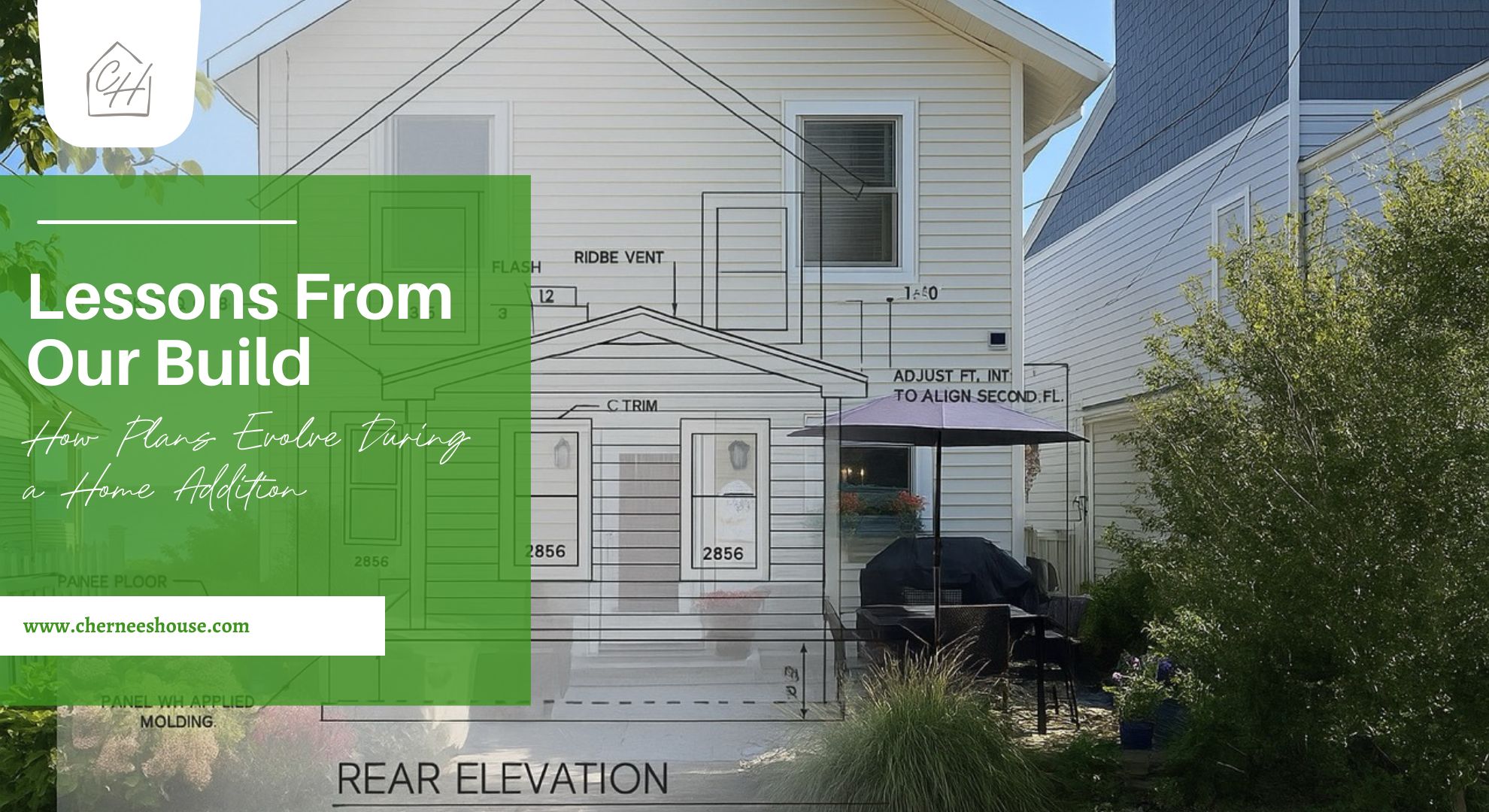
One of the first things you learn when taking on a home addition is this: plans always evolve. What looks perfect on paper doesn’t always translate the same way once construction begins—and that’s not a failure. It’s part of the process. The real key to successful home addition planning is knowing when to pause, reassess, and pivot before small issues become costly mistakes.
Start With the Right Architect
When planning a home addition, one of your earliest and most important decisions is choosing the right architect. My best advice? Interview several. Invite them into your home, walk them through the existing space, and talk openly about how you live and what you hope the addition will become.
From the beginning, we knew we wanted our addition to feel like a natural extension of our home—not an afterthought. We envisioned a multi-purpose gathering space with ample storage, a vaulted ceiling, and as much natural light as possible.
Because we’re building on a lake, our home addition design also had to meet strict regulations. Avoiding a variance meant staying within the exact footprint of our existing deck. We knew this would likely require trade-offs, including the possible loss of a window, but we hoped thoughtful planning would minimize the impact.

When the First Design Isn’t Quite Right
The initial design from our architect was thoughtful—but something felt off. To preserve a kitchen window overlooking a nearby park, the proposed layout moved the entrance to the side of the house.
The initial design from our architect was thoughtful—but something felt off. To preserve a kitchen window overlooking a nearby park, the proposed layout moved the entrance to the side of the house.
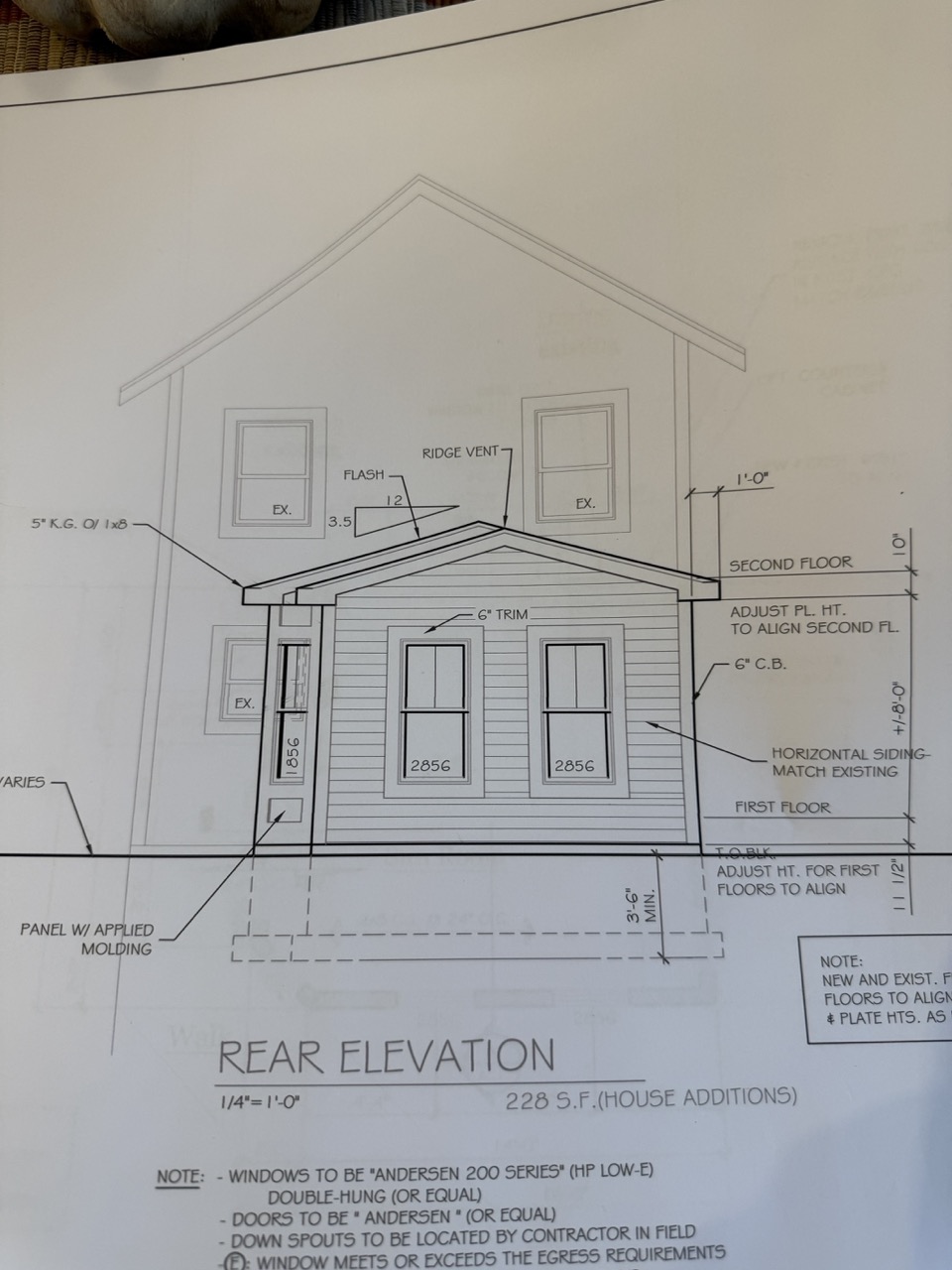
But here’s where the real magic happened.
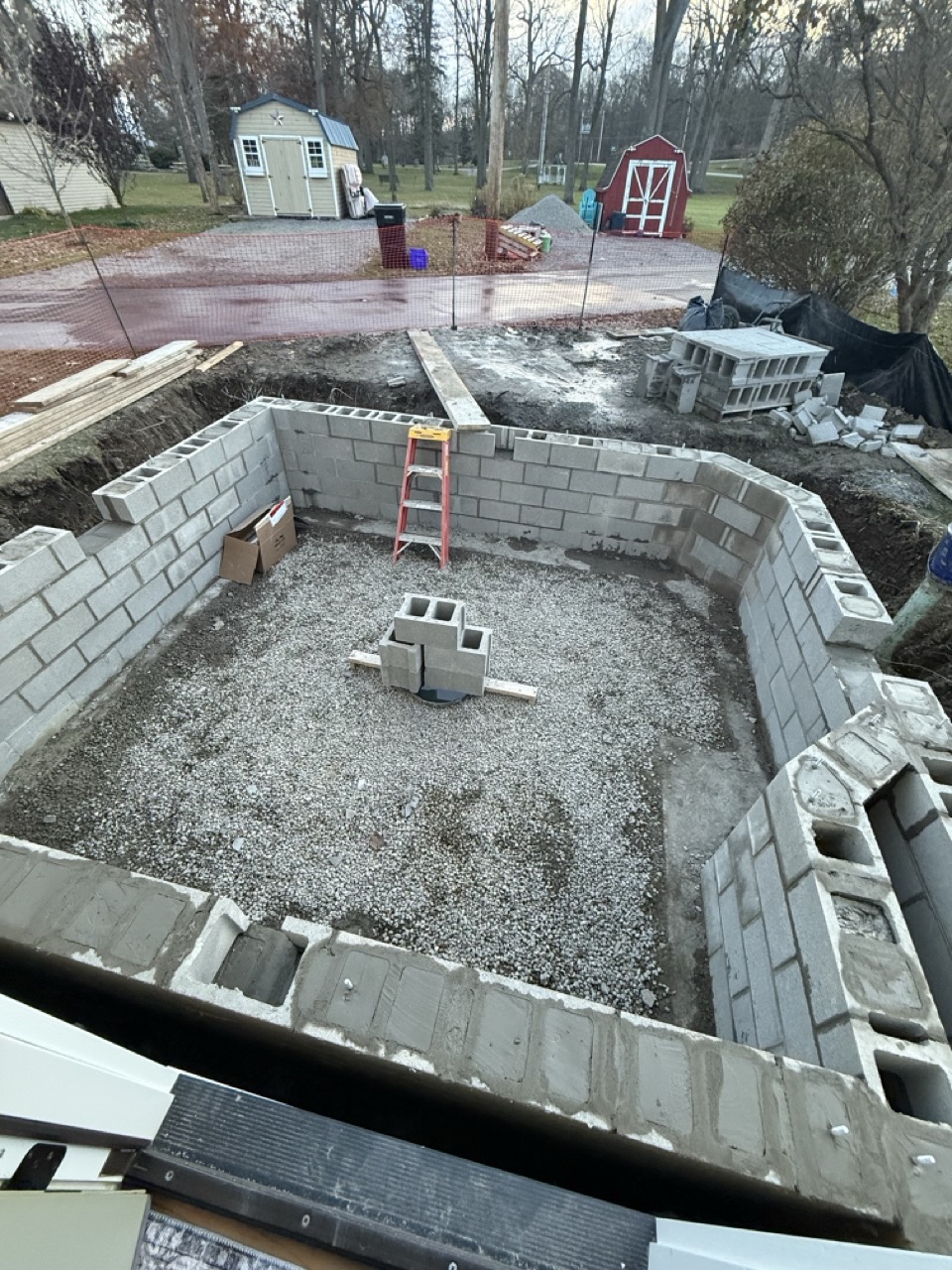
As construction planning continued, our mason pointed out something critical: with the architect’s current design, that cherished window would no longer overlook the park—it would actually be looking straight into the wall of the new addition. Even worse, the layout would result in less square footage than planned, and the closet was smaller than we had envisioned.
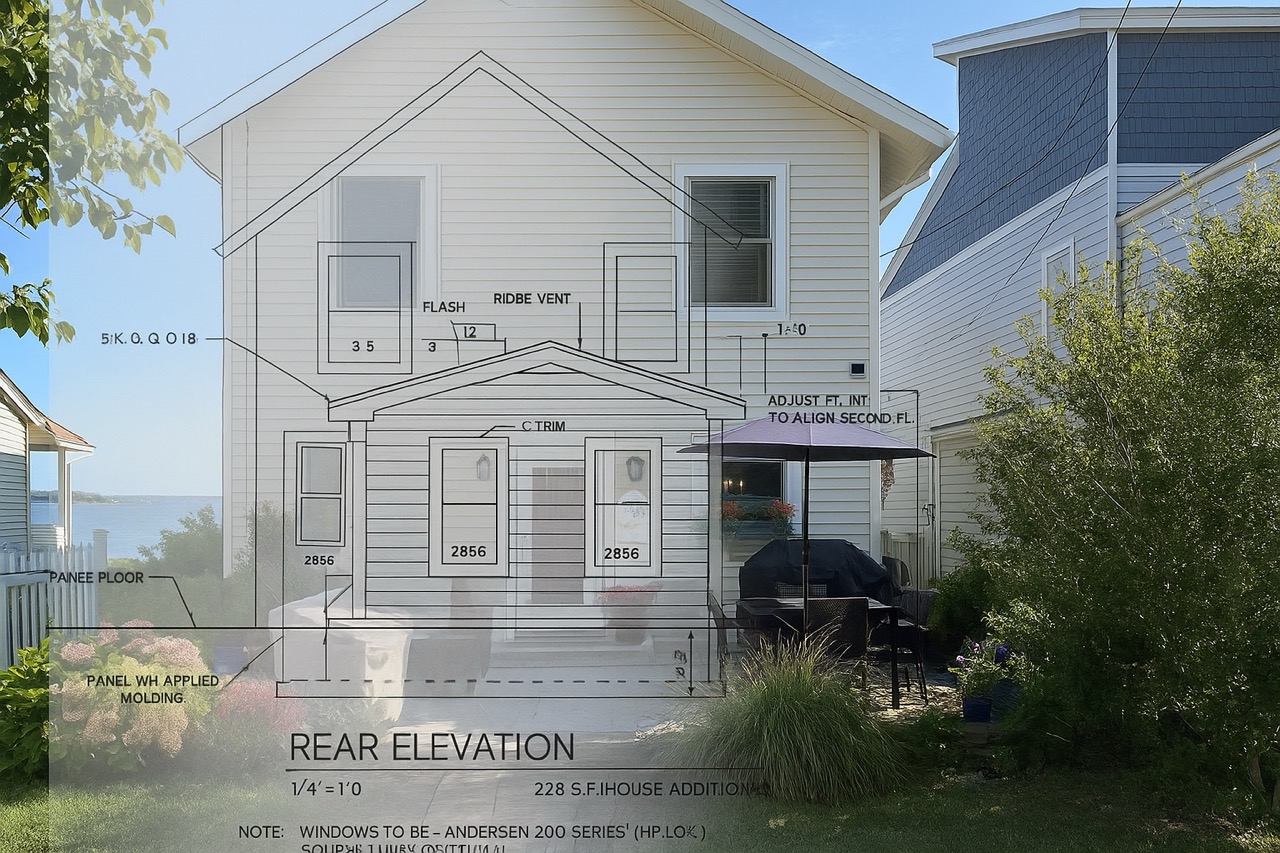
That’s when we knew it was time to pivot.
Making the Pivot (and Why It Was Worth It)
I immediately called our builder and explained our concerns. This kind of change is more common than you might think. What seems great on paper doesn’t always work once you start visualizing it in real space.
We reworked the layout entirely:
- We moved the door back to face the road
- Straightened out the walls
- Eliminated the bay window (which was actually taking away usable square footage)
- Removed angled corners to create a cleaner, brighter, box-shaped space
Most importantly, we made one entire wall dedicated to storage.
Yes, this meant no windows on that wall—but it faced our neighbors, with only about ten feet between our homes. It turned out to be the perfect place for a windowless wall. We added a very large closet and even managed to create a pantry we never thought we’d have.
What felt like a compromise quickly became a win-win.
Lessons Learned Along the Way
If there’s one takeaway from our experience, it’s this:
Speak up early and often.
- Make sure your builder is doing daily site visits
- Once the foundation is in place, walk the site and visualize how the space will actually function
- Pay attention to flow, light, and how you’ll really use the rooms
- Ask every question you need to feel confident moving forward
I’m incredibly thankful that our mason spoke up and shared his insight with both us and the builder. In fact, this walkthrough-and-visualization step is something I truly believe builders should include as a standard part of their process.
Because here’s the truth: it’s far easier (and far less expensive) to make changes before framing begins.
Plans evolve. And when you allow them to—thoughtfully and early—you often end up with something even better than you imagined.