
I’ve always loved to entertain.
In the summer, it comes naturally. Our home may not be large, but between the porch and the lakefront we can comfortably host 50 or more people without it ever feeling crowded. The doors are open, the air is warm, and people move freely in and out between spaces. It all flows in a way that feels relaxed and effortless.
Winter, however, has always felt a little different.
When everything moves indoors, the house suddenly feels more contained. Our dining area was a decent size — we could fit about 12 people around the table if we needed to — but the space surrounding it always felt a little tight. It was functional, but it never felt especially comfortable when hosting larger dinners.
Over time, I started thinking more seriously about how a dining room transformation could improve the way we use the space.
Why Our Old Dining Room Layout Felt Tight
Long before we committed to building the addition, I had already begun imagining ways to improve the dining room. My original idea was to create a full cabinet wall along one side of the space.
I had it completely envisioned: cabinetry stretching all the way to the ceiling and wrapping around the existing window. The design would provide extra storage and a generous counter surface that could double as a buffet during gatherings. It felt like the perfect solution for both everyday living and entertaining.
At the time, it seemed like the obvious answer to the challenges the room presented.
But once the addition entered the conversation, everything began to shift.
How the Addition Changed the Original Plan
When we decided to move forward with the addition, we also made the decision to widen the opening between the new space and the existing home. I loved that idea immediately. Opening the wall would allow the rooms to feel connected — as though they were designed together from the beginning instead of feeling like an afterthought.
And once the framing went up, it was clear we had made the right decision.
The wider opening instantly improved the flow between the kitchen, dining room, and addition. The house began to feel larger and more cohesive.
But the change came with trade-offs. The wider opening meant losing some of the cabinetry I had planned, and even part of the window that design had originally been built around. What once seemed like a simple plan for storage suddenly required a new approach.
That’s when the real design work began — not just imagining what could be, but figuring out how to make the space work with the changes.
The Design Pivot That Made the Space Better
Instead of trying to force the original idea to fit, we pivoted.
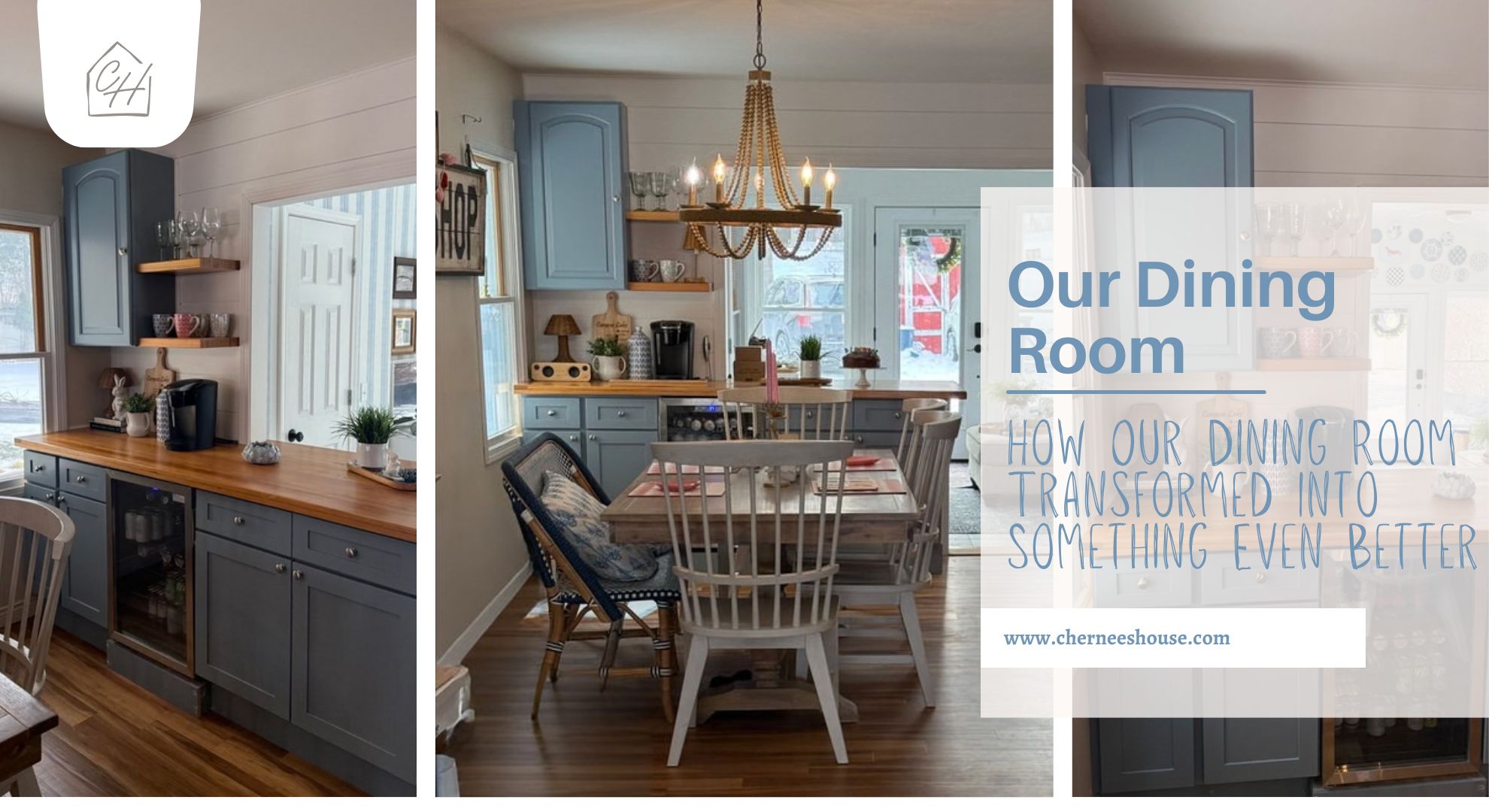
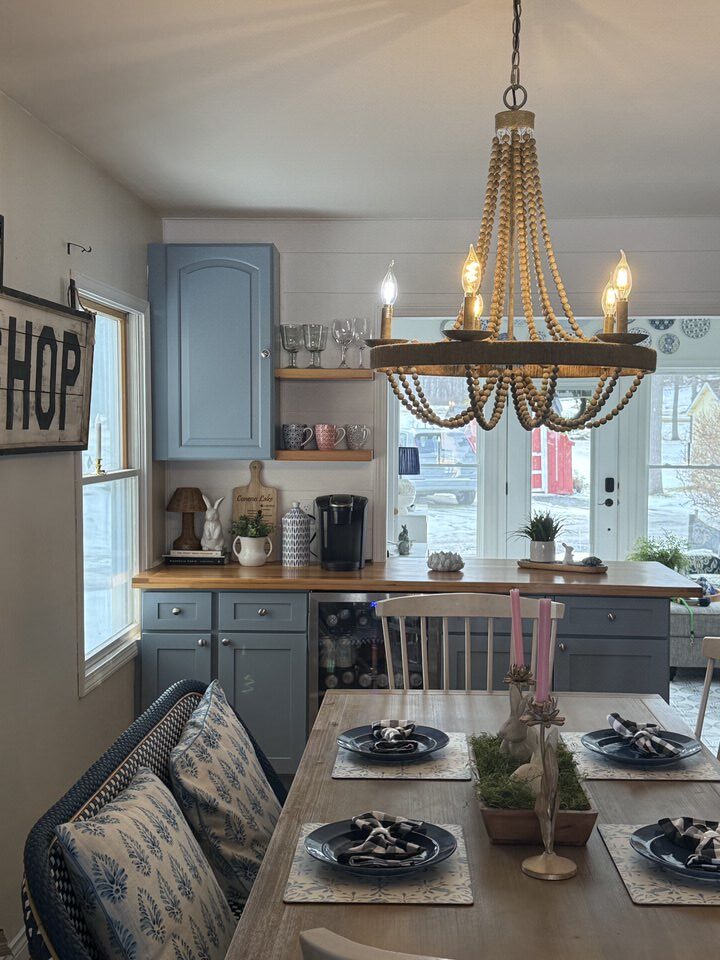
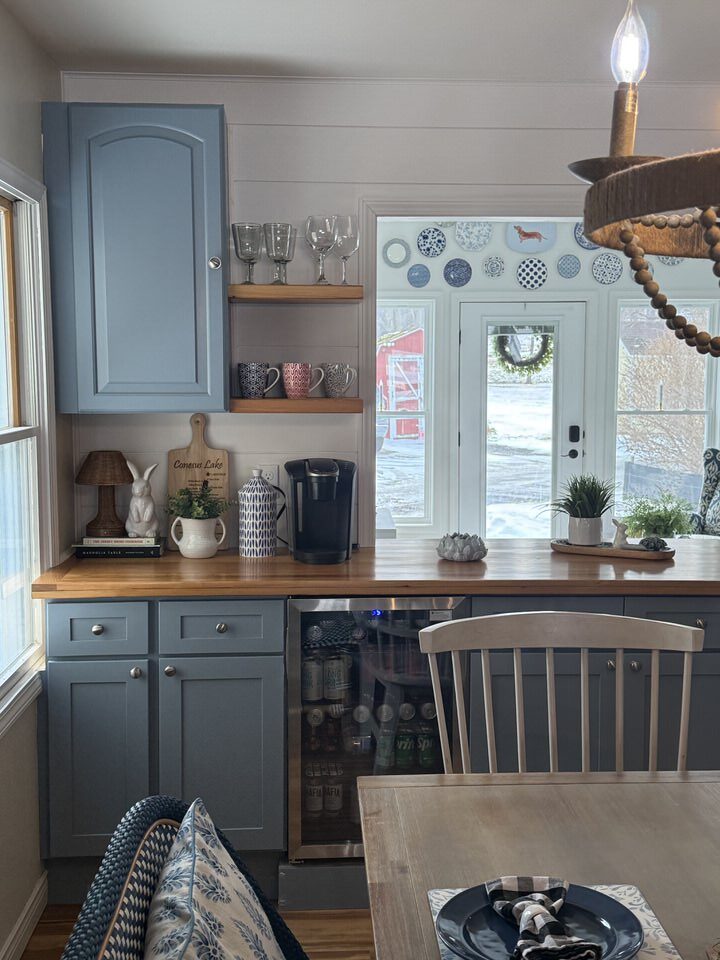
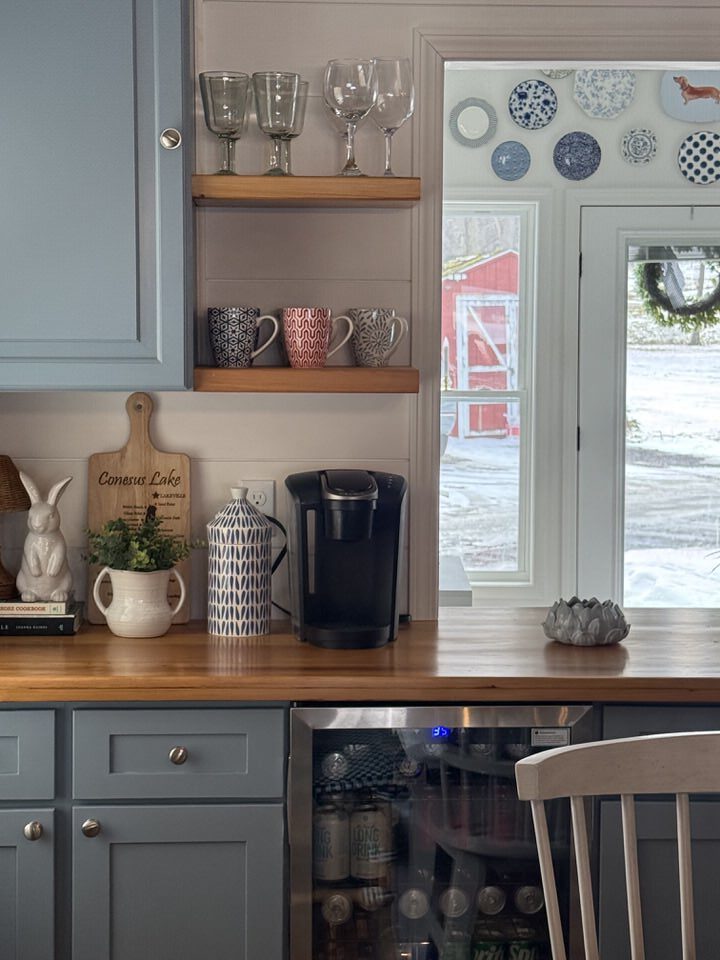
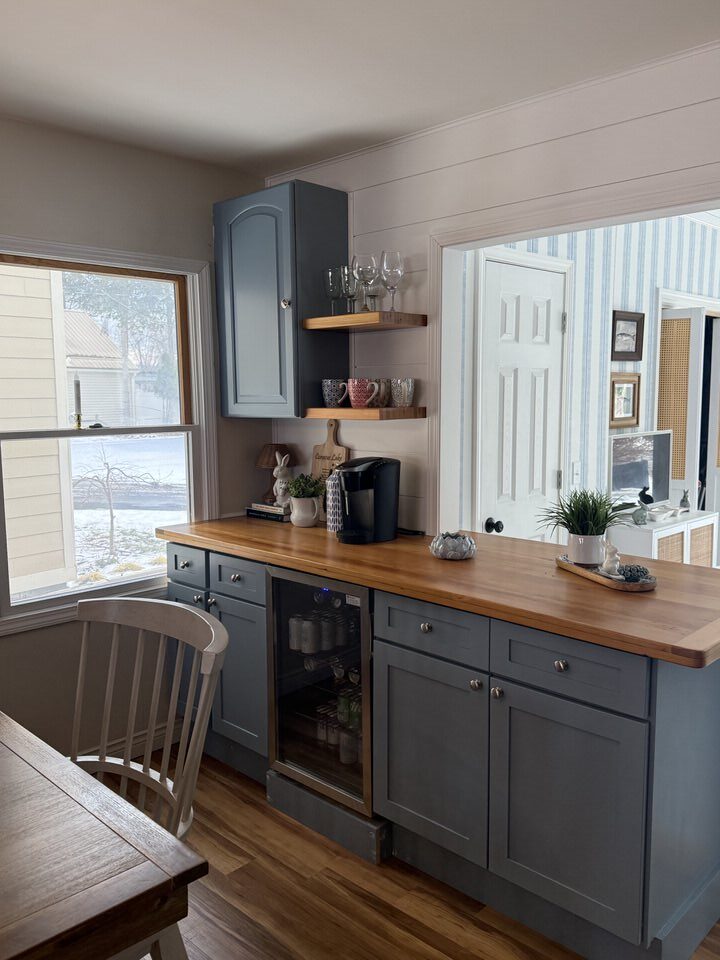
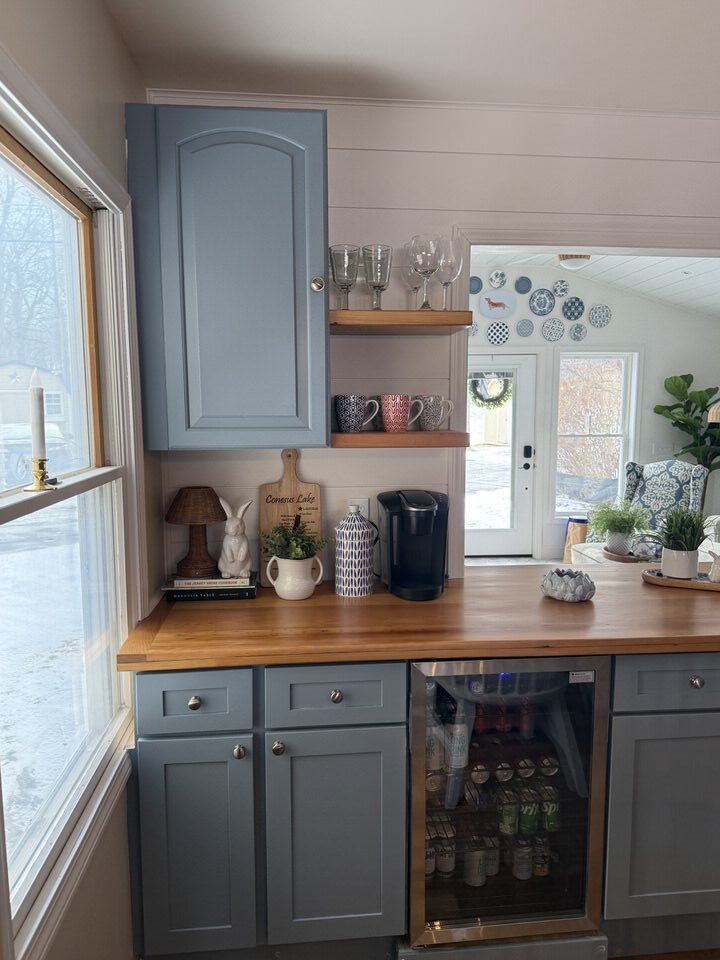
One of the cabinets we had planned for the kitchen was relocated to the dining area. Above it, we installed three floating shelves that now function as our coffee-and-wine station. To restore the additional surface area I had wanted for entertaining, we designed a custom butcher block island to anchor the space.
I’ll admit the island was one of the compromises of this project.
The wood tone ended up slightly darker and more yellow than I had originally imagined. It leans a bit more “country” than the softer finish I had envisioned when I first designed it. It still looks beautiful and works well in the space, but it wasn’t exactly what I pictured in my mind.
And that’s part of the design process too. Sometimes a piece needs time to settle into a room before you truly see how it fits.
The island quickly became one of the most functional elements in the dining room.
Creating a Coffee and Wine Station That Works
Below the island counter we installed a large wine refrigerator — something that felt essential for summer entertaining at the lake — along with custom cabinetry for storage. I intentionally ordered the cabinets unfinished so I could paint them the same color as the kitchen cabinetry.
In our previous homes, I experimented with mixing cabinet colors, but those kitchens were much larger. In this space, I knew matching the kitchen cabinetry would create a smoother transition between rooms.
It was absolutely the right choice.
The dining room now feels open, spacious, and intentionally designed. It’s hard to believe how much the room has changed.
Recently we hosted our first large dinner party with the new layout — ten people gathered comfortably around the table — and everything worked exactly the way I had hoped it would. The island served beautifully as a buffet during dinner, and during everyday life it naturally acts as a bit of a drop zone (although keeping it clear is still a work in progress).
One of my favorite parts of the space, though, is what I now call our coffee nook.
The open shelving makes grabbing a mug in the morning or a wine glass in the evening effortless. I styled the shelves with greenery, a cutting board engraved with a map of the lake, and a small wicker lamp — because I truly believe lamps belong in kitchens. That soft lighting early in the morning or late in the evening adds a warmth that completely changes how the room feels.
What This Dining Room Transformation Taught Me
This addition has transformed the way we live in our home, especially during the colder months when everything happens indoors.
And when summer returns — with doors open and guests flowing in again — I already know this space will work even harder for us.
If there’s one thing I’ve learned through this dining room transformation, it’s this: when creating a new space, you have to stay open.
Open to change.
Open to compromise.
Open to ideas that weren’t part of the original plan.
Sometimes what feels like a trade-off in the moment ends up improving the way you live in ways you didn’t expect.
Design isn’t about perfection.
It’s about evolution. It’s about paying attention to how your home feels and allowing it to grow into something even better over time.
And this space?
It truly became better than I imagined.